
Tulum Coba and Cenote Tour From Cancun
A Tulum, Coba, and cenote tour packs two archaeological sites and a swim into one ambitious day from Cancun. This guide explains the route, timing, admission costs, booking questions, accessibility concerns, and tradeoffs that matter most.
A Tulum, Coba, and cenote tour from Cancun is an ambitious full-day circuit. It combines a coastal archaeological site, a substantial inland road leg, a second archaeological site, and time for swimming. The variety is the attraction, but the route and afternoon entry cutoffs leave little room for a late start. Choosing the right package comes down to pacing, transparent admissions, and enough scheduled time at each stop.
- Treat the excursion as a full-day commitment rather than a short side trip.
- Favor a schedule that reaches both archaeological zones well before their final-entry cutoffs.
- Check whether Tulum's separate fee components, Coba admission, and cenote costs are included.
- Identify the exact cenote and confirm what the swimming stop provides.
- Confirm accessibility arrangements for the vehicle, both ruins, and the selected cenote.
The best package is not simply the one with the longest attraction list. Look for a workable sequence, approximate arrival times, an itemized price, and a clearly identified swimming venue. Those details reveal whether the day has been planned as a coherent route or squeezed into an optimistic sales description.
Decide if the three-stop format matches your travel style
This excursion suits travelers who value variety and want a broad introduction in one day. Tulum supplies the coastal setting, Coba adds an inland archaeological stop, and the cenote breaks up the road journey with a swim. The main compromise is pace. Every extra minute in transit or at one attraction reduces the time available at the others.
Good reasons to choose the combined tour
- You have limited vacation time and want to see several distinct settings in one excursion.
- You are comfortable with a structured schedule and a long road day.
- You prefer organized transportation instead of planning separate highway transfers.
- A shorter visit at each stop is acceptable in exchange for a broader itinerary.
When a single-focus trip makes more sense
Separate the stops if your priority is detailed interpretation, flexible photography, a leisurely swim, or less time in a vehicle. For a slower look at the coastal archaeological zone, the Tulum Day Trip From Cancun guide focuses on planning that destination without adding the inland Coba leg.
Families, travelers with limited stamina, and anyone who dislikes tight schedules should study the itinerary closely. A combination tour can still work, but only if the walking, transfers, swim access, and return schedule match the group's needs. Attraction count is less important than a day everyone can comfortably complete.
Understand the road route before comparing packages
Official access directions place Tulum south of Cancun along the federal highway corridor. Coba is then reached inland from Tulum using State Highway 109 toward Nuevo Xcan. That geography creates a long inter-site sequence before accounting for the cenote, hotel collection, rest stops, or the return to Cancun.
| Stage | Planning implication |
|---|---|
| Cancun to Tulum | The day begins with a southbound highway transfer before sightseeing starts. |
| Tulum to Coba | The itinerary turns inland and continues for a substantial additional road leg. |
| Cenote visit | The exact position in the schedule depends on the cenote selected by the package. |
| Return to Cancun | Hotel location, route conditions, and the tour sequence affect the return time. |
Avoid comparing tours by attraction names alone. Ask for the planned order and approximate arrival at each archaeological zone. A route that places both ruins early and preserves a realistic swimming window is more convincing than one that provides only a pickup time and a list of stops.
Independent drivers and private groups have more control over stops, but the same geographic limits apply. Build the day around the archaeological entry cutoffs rather than an exact door-to-door journey estimate. Traffic, collection points, and the chosen cenote can all change the practical duration.
Protect the itinerary from afternoon entry cutoffs
Current visitor information lists both Tulum and Coba as open daily from 8:00 a.m. to 5:00 p.m. Tulum lists final entry at 3:30 p.m., while Coba lists final entry at 4:00 p.m. These are not target arrival times. A sensible itinerary reaches each site substantially earlier, leaving a margin for road delays and entrance procedures.

| Site | Listed daily hours | Listed final entry | Practical takeaway |
|---|---|---|---|
| Tulum archaeological zone | 8:00 a.m. to 5:00 p.m. | 3:30 p.m. | An early visit leaves more room for the inland journey. |
| Coba archaeological zone | 8:00 a.m. to 5:00 p.m. | 4:00 p.m. | Do not rely on arriving close to the cutoff. |
Late hotel collection, lengthy pickup rounds, traffic, or an extended cenote stop can make the three-stop format less forgiving. Check the promised pickup window and ask when the tour expects to reach each archaeological zone. The answer matters more than a vague claim that all major attractions are included.
Still comparing Tulum Coba Cenote Tour?
Ask for tour ideas, hotel suggestions, or a simple trip plan that combines both.
Trip Helper
Timing questions worth asking before payment
- What is the pickup window for your hotel or meeting point?
- In what order will Tulum, Coba, and the cenote be visited?
- What are the approximate arrival and departure times at both ruins?
- How much time is allocated for changing clothes and swimming?
- Is the return time an estimate, and where does the tour finish?
Keep the evening after the excursion flexible. Without a named operator, pickup route, or cenote, there is no responsible way to promise a precise return time. Your booking confirmation should provide the meeting instructions and the most relevant schedule for the package selected.
Know what each stop contributes to the day
Tulum brings the coastal archaeological setting
Tulum is the coastal component of the circuit and usually the stop most sensitive to an efficient southbound start. Guided visits are among the services listed for the site, but a tour package should still state whether a guide is included, which language is offered, and how much independent time follows the explanation.
Entry at Tulum involves more than one possible charge. Official materials separate the archaeological-zone fee from charges connected with Jaguar Park administration and CONANP. A tour advertised as including Tulum should identify which components it covers rather than presenting an unexplained admission allowance.
Coba adds the inland archaeological stop
Coba changes the character of the route by drawing the trip inland along State Highway 109. This additional leg is why the combined itinerary needs a full day and careful timing. If Coba is central to your decision, look for a schedule that protects meaningful time there instead of treating it as a brief stop before the final-entry cutoff.
The cenote should be identified by name
The brief does not identify a particular cenote, so its layout, swimming conditions, facilities, and access requirements cannot be assumed. Before booking, find out the venue's name and whether admission, a life jacket, a locker, changing space, and swim time are included. Those details determine how restorative or rushed the final stop feels.
Travelers who care more about swimming than checking off two ruins can compare a dedicated outing in the Cenote Azul From Cancun Guide. A cenote-led day removes one archaeological transfer and gives the water experience more weight in the itinerary.
Compare the real cost, not just the headline tour price
A useful price comparison starts with an itemized inclusion list. The advertised tour price may or may not cover every admission component, swimming expense, meal, or transfer. No specific operator or cenote was supplied here, so there is no universal package price or standard list of inclusions.
| Cost area | What to verify |
|---|---|
| Tulum | Confirm coverage of the archaeological-zone charge and the separate Jaguar Park and CONANP components. |
| Coba | The official listing gives MXN 210 for foreign visitors and MXN 105 for domestic visitors, but fees should be rechecked before travel. |
| Cenote | Confirm admission and any life-jacket, locker, or other venue charges. |
| Transport | Check the pickup area, meeting point, and any transfer limitations. |
| Food and drinks | Look for an explicit description rather than assuming lunch or beverages are included. |
Coba's listing also notes discounts for eligible Mexican students and teachers and INAPAM cardholders. Carry the documentation needed for any discount you plan to use, and confirm whether a prepaid tour handles discounted admissions or uses its own package structure.
INAH archaeological-zone admission is free on Sundays for eligible Mexican citizens and foreign residents in Mexico. This is not a universal free-entry day for all travelers. At Tulum, the separate Jaguar Park and CONANP charges are not eliminated by the archaeological-zone benefit.
What an all-inclusive description should spell out
- Every Tulum admission component covered by the package
- Coba archaeological-zone admission
- Cenote admission and mandatory swim equipment
- Guide service and the language used
- Meal, beverages, or rest-stop arrangements
- Hotel pickup boundaries and the return point
If the package does not itemize these components, two apparently similar prices cannot be compared fairly. Review the cancellation terms at the same time, especially when booking for a large group or arranging the excursion near the end of a Cancun stay.
Use a focused checklist before booking
- Confirm the exact pickup point and pickup window.
- Ask for the stop order and approximate arrival times at Tulum and Coba.
- Request an itemized list of archaeological and park charges included.
- Identify the cenote and check its swim equipment and facility arrangements.
- Confirm the guide language and the amount of free time at each site.
- Review mobility support, cancellation terms, and the estimated return point.
At Tulum, INAH advises visitors to use the official INAH, GAFSACOMM, and CONANP ticket offices to avoid fraud or resale. This matters most when admission is not included and you must purchase one or more components independently. Follow the payment instructions in your confirmed package rather than accepting unsolicited ticket offers.

Read the pickup language carefully
A listing that mentions Cancun pickup should still identify the service area. Confirm whether collection is at your accommodation, a nearby meeting point, or another transport hub. Save the confirmation where it remains accessible without a data connection, and be ready before the stated window so the route begins cleanly.
Private-tour travelers should ask which parts of the schedule are adjustable. Flexibility has limits because both archaeological zones stop admitting visitors before closing time. Decide in advance which stop receives extra time if the road day runs behind schedule.
Pack for walking, vehicle time, and swimming
Pack for two different activities without overloading your day bag. You need clothing and footwear suitable for archaeological visits, followed by swim gear and a dry layer for the return journey. Keep essential items compact so changing at the cenote does not become a lengthy unpacking exercise.
- Supportive walking shoes with secure soles
- Swimwear, a towel, and a dry change of clothes
- Sun protection suitable for an outdoor sightseeing day
- Personal water for the road, subject to site entry rules
- Booking confirmation and identification needed for any discount
- A protective pouch for electronics during the swimming stop
Food, smoking, and pets are prohibited at both archaeological sites under the listed visitor rules. Plan meals and snacks around the permitted areas in your tour schedule rather than expecting to eat while walking through the ruins. Follow the selected cenote's instructions before entering the water.
Tulum lists a separate charge for professional cameras. Travelers carrying specialized photography equipment should check the current rule and determine whether the tour allows enough time for any required payment. Ordinary packing and destination advice is also covered in the Cancun Travel Tips for First Timers article.
Confirm accessibility across all three parts of the excursion
Official listings display an accessibility service indicator for both Tulum and Coba, and both sites list toilets. Those indicators do not define a continuous step-free route, mobility-device rental, vehicle access, transfer assistance, or conditions at the cenote. The combined excursion should not be described as wheelchair-accessible without details from the exact operator and swimming venue.
| Part of the day | Accessibility detail to confirm |
|---|---|
| Tour vehicle | Step height, storage for mobility equipment, and transfer assistance |
| Tulum | Drop-off arrangements, accessible route details, and toilet access |
| Coba | Route suitability, distances, assistance, and toilet access |
| Cenote | Changing facilities, water-entry method, flotation equipment, and companion support |
Travelers with limited mobility should ask for a description of each transfer rather than a general yes-or-no accessibility label. Swimming access can be the decisive part of the day, and conditions depend entirely on the selected cenote. Families should also confirm the water-entry arrangements and any venue-specific participation requirements.
Recheck the current operating rules, archaeological-zone schedules, road notices, and weather conditions shortly before departure. This single final check is especially useful because the itinerary depends on several organizations and a long road sequence rather than one self-contained attraction.
Make the booking decision based on pace and transparency
Choose the combined tour if seeing both archaeological zones matters more than lingering at either one. Its strength is breadth: a coastal site, an inland site, and swimming share one organized road day. Its limitation is the same. The schedule must absorb substantial transfers while respecting two afternoon entry cutoffs.

Choose separate excursions if you want deeper interpretation, flexible photography, a longer cenote visit, or a less compressed pace. Splitting the route costs another vacation day, but it removes the pressure to keep three different experiences moving on one timetable.
Before paying, compare the stop order, expected arrival times, exact cenote, itemized admissions, pickup area, accessibility, and cancellation terms. A package that answers those questions clearly is easier to evaluate than one built around a low headline price. Once booked, review the confirmation and keep the rest of the excursion day free.
Frequently asked questions
How long is a Tulum, Coba, and cenote tour from Cancun?
Treat it as a full-day excursion. The route includes a southbound journey to Tulum, a substantial inland leg to Coba, a cenote stop, and the return to Cancun; exact timing depends on the operator, pickup route, and selected cenote.
Should a combination tour visit Tulum or Coba first?
The better sequence is the one that reaches both ruins comfortably before their final-entry cutoffs. Tulum currently lists final entry at 3:30 p.m. and Coba at 4:00 p.m., so ask for approximate arrival times rather than judging the package by stop order alone.
Are admission fees included in the tour price?
Inclusions depend on the package. Confirm coverage of Tulum's separate archaeological, Jaguar Park, and CONANP components, plus Coba admission, cenote entry, swim equipment, meals, and pickup.
What are the current hours for Tulum and Coba?
Both archaeological zones are listed daily from 8:00 a.m. to 5:00 p.m. Tulum lists final entry at 3:30 p.m., while Coba lists final entry at 4:00 p.m.; recheck the schedule shortly before travel.
Is the three-stop tour wheelchair-accessible?
Do not assume the entire excursion is wheelchair-accessible. Tulum and Coba display accessibility service indicators, but the listings do not define complete step-free routes, vehicle transfers, mobility equipment, or access at the selected cenote.
Can everyone swim during the cenote stop?
Swimming arrangements depend on the cenote and package selected. Confirm the water-entry method, flotation equipment, changing facilities, participation rules, and support available before booking.
Is archaeological-zone admission free on Sundays?
Sunday admission is free at INAH archaeological zones for eligible Mexican citizens and foreign residents in Mexico. It is not a universal offer, and the separate Jaguar Park and CONANP charges at Tulum still apply.

Chichen Itza Sunrise and Cenote Ik Kil from Cancun
Avoiding crowds and heat, this is the best way to see one of the new wonders. Your pictures well be amazing with not many people around the buildings...

4x1: Coba, Cenote, Tulum and Playa del Carmen Tour from Cancun
This 4 x 1 Tulum, Coba, Cenote and Playa del Carmen tour shows you the best of the Riviera Maya in one exciting day...
Maya Adventure from Cancun Coba and Tulum Ruins with Cenote swim
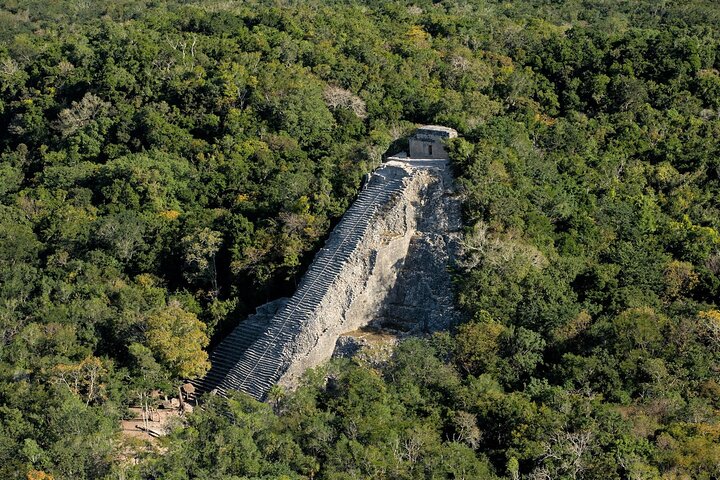
Experience the old and the new of Maya culture, with a dash of adventure, on this full-day tour from Cancun. Wander...

Tulum & Coba Ruins with Cenote Swim Tour from Playa del Carmen
The Tulum Coba Cenote Tour from Cancun brings you to two unique Mayan ruins sites with an expert guide. Explore the...
Experiences to explore
 Explore experience ↗
Maya Adventure from Cancun Coba and Tulum Ruins with Cenote swim
◷ 10 hr
Experience the old and the new of Maya culture, with a dash of adventure, on this full-day tour from Cancun. Wander the ruins of Coba,
From $189.00 USD
View dates Explore experience ↗
Tulum and Coba Mayan sites, swim in Cenote, Lunch & tickets
◷ 11 hr–12 hr
To begin you will go to the Archaeological Site of Tulum, where with the help of the guide you can learn very relevant information abou
See dates for Current pricing
View dates Explore experience ↗
Discover the Mayan archaeological sites of Tulum & Coba in 1 day
◷ 14 hr
4 Wonders in 1 Day: Tulum, Cobá, Cenote & Playa del Carmen ️️ Step into the world of the ancient Maya with a journey that spans ruins,
See dates for Current pricing
View dates