
MUSA Cancun Guide
Slip beneath Cancún’s surface to discover which MUSA experience suits you best, before one crucial choice changes everything.
You don’t visit MUSA like a normal museum. You slip into clear Caribbean water and find silent concrete figures standing on the seafloor between Cancún and Isla Mujeres, where coral and fish now steal part of the show. Some sites sit just 3 to 10 meters down, so the logistics stay easy, but choosing the right tour makes all the difference. The real question isn’t just how to go. It’s which version of MUSA fits you best.
Key Takeaways
- MUSA lies within Cancún National Marine Park, mainly at Manchones Reef, Punta Nizuc, and Punta Sam near Isla Mujeres.
- Most sculptures sit 3–10 meters deep; Punta Nizuc is shallowest at 2–4 meters and best for snorkeling.
- The museum features 500+ marine-concrete sculptures designed as an artificial reef to support coral growth and reduce pressure on natural reefs.
- Visits are only through licensed tours, usually departing from Cancún’s Hotel Zone or Isla Mujeres, with boat rides lasting about 20–30 minutes.
- Expect tour prices from about US$50–$165; dry-season mornings from December to April usually offer the calmest water and best visibility.

Cancun Speedboat and Snorkel Tour with Thrilling Lagoon Adventure
Explore the stunning beauty of Cancun on a guided speedboat and snorkeling tour through the Nichupté Lagoon and Punta Nizuc National Park Reef. Perfe...
Cancun Submarine and Optional Snorkeling Tour
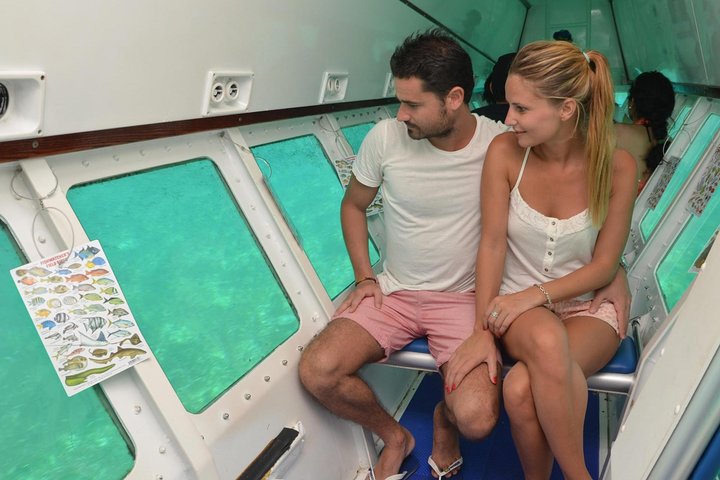
This semi-submarine offers a front-row seat to the Nichupté Lagoon and Punta Nizuc Reef. Choose between two excitin...

Cancun Speedboat and Snorkeling Adventure with Hotel Pickup
Discover Cancun’s stunning turquoise waters on a thrilling Speedboat & Snorkeling Adventure. Drive your own speedb...

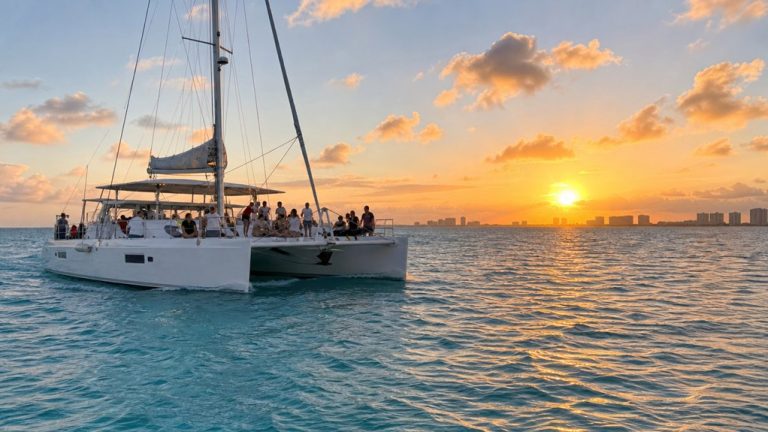
Private Catamaran Tour to Isla Mujeres, Snorkeling* from Cancun
Tours in Catamaran, Cancun. Private Catamaran Charters. Charter for 1-15 PaassengersPrivate Catamaran to Isla Mujer...
What Is MUSA Cancun?

Imagine a museum where the walls are blue water and the exhibits wear coral instead of dust. At Musa Underwater Museum off Cancún and Isla Mujeres, you don’t just look at art. You swim above it. Created in 2009 and opened in 2010, this sea-floor gallery helps form an artificial reef and eases pressure on natural coral. More than 500 life-sized underwater sculptures stand in three galleries inside the Cancún National Marine Park. Jason DeCaires Taylor and Mexican artists built them from pH-neutral marine concrete so coral can settle in and fish can move through. You’ll spot haunting circles of figures like Vicissitude, shapes, and sandy seafloors alive with bubbles. Most pieces rest in clear, shallow water, though some sit deeper near Manchones Reef. Many visitors experience the museum through snorkeling tours, which offer an easy way to see the shallow sculptures up close.
Is MUSA Cancun Worth Visiting?
For the right kind of traveler, MUSA Cancun is absolutely worth visiting. If you love unusual experiences, you’ll get a memorable mix of art, sea, and purpose here. More than 500 underwater sculptures create an artificial reef, and you can watch corals slowly claim the concrete. You might spot small turtles or schools of snapper, especially if visibility cooperates. Scuba gives you the closest look, but snorkelling still feels special at shallow sites. Keep your expectations realistic. This is more about eerie beauty and conservation than nonstop marine drama. Tours usually cost about $50 to $165, plus fees, and bumpy boat rides can test your stomach. Choose a small-group operator, confirm the gallery, and don’t touch anything. The fish appreciate your manners, even underwater. Many tours also pass through Nichupté Lagoon, adding a scenic glimpse of Cancun’s natural oasis to the trip.
Where Is MUSA in Cancun?
You’ll find MUSA inside the Cancún National Marine Park, between the north end of the Hotel Zone and Isla Mujeres, with its best-known sculptures resting off Isla Mujeres at Manchones Reef. You can reach the museum only by licensed tour, usually leaving from marinas in the Hotel Zone or Isla Mujeres, then skimming over bright blue water for about 20 to 30 minutes. If you want the easiest access from Cancun, Punta Nizuc sits just off the Hotel Zone in shallow, clear water that works especially well for snorkelers. Many visitors choose Punta Nizuc for its shallow, clear water, which makes snorkeling especially approachable near Cancun.
MUSA Location Overview
Out in the Cancún National Marine Park, MUSA sits between the north end of Cancún’s Hotel Zone and Isla Mujeres, with its main galleries scattered offshore in clear Caribbean water. This Cancún Underwater Museum isn’t one single spot. You’ll find more than 500 sculptures spread across three sites, from shallow snorkel-friendly areas to deeper zones for divers. Manchones Reef near Isla Mujeres holds the best-known large installations and close-up underwater scenes. Punta Nizuc, just off the Hotel Zone, is the shallowest gallery, with sculptures resting in only about 2 to 4 meters of water. Another section lies near Punta Sam and El Meco. Many visitors reach these sites on Cancun boat tours, which makes exploring MUSA’s different galleries easier from both the Hotel Zone and Isla Mujeres. As you look at the map, MUSA feels like a treasure trail under the sea, minus the pirates and with better visibility.

5-in-1 Cancun Snorkeling: Turtles, Reef, Musa, Shipwreck, Cenote
1st area: snorkel on a coral reef, full of fish and marine life with an 8-12 feet depth, warm water, and few or non...

Isla Mujeres Cruise with Beach Club, Snorkel, Lunch and Open Bar
You will sail the turquoise waters of the caribbean aboard a catamaran and spend a wonderful time exploring Isla Muj...

Snorkeling Adventure from Cancun
Enjoy a day full of adventure with one thrilling activities in Cancun: Snorkeling in the crystal-clear Caribbean Sea...
Getting There From Cancun
Once you’ve spotted MUSA on the map, getting there feels much simpler than its scattered layout suggests. You’ll head into the Cancún National Marine Park, between the Hotel Zone and Isla Mujeres, where the main galleries sit near Manchones Reef about 30 minutes from Cancún by boat. Most travelers start at Marina Puerto Cancún, where licensed operators run half-day snorkel and dive trips. You can also ferry to Isla Mujeres in 20 to 30 minutes, then join a short speedboat hop toward the museum zone. The Cancun–Isla Mujeres ferry is a common first leg for travelers who choose to reach Isla Mujeres before connecting to a museum tour. Since sculptures sit at different depths, your tour will match snorkel-friendly areas or deeper dive sites. You can’t visit independently, so book an authorized outing with boat transfer included, and check whether park fees are covered. Seaspray is your ticket.
Why Does MUSA Have Underwater Statues?
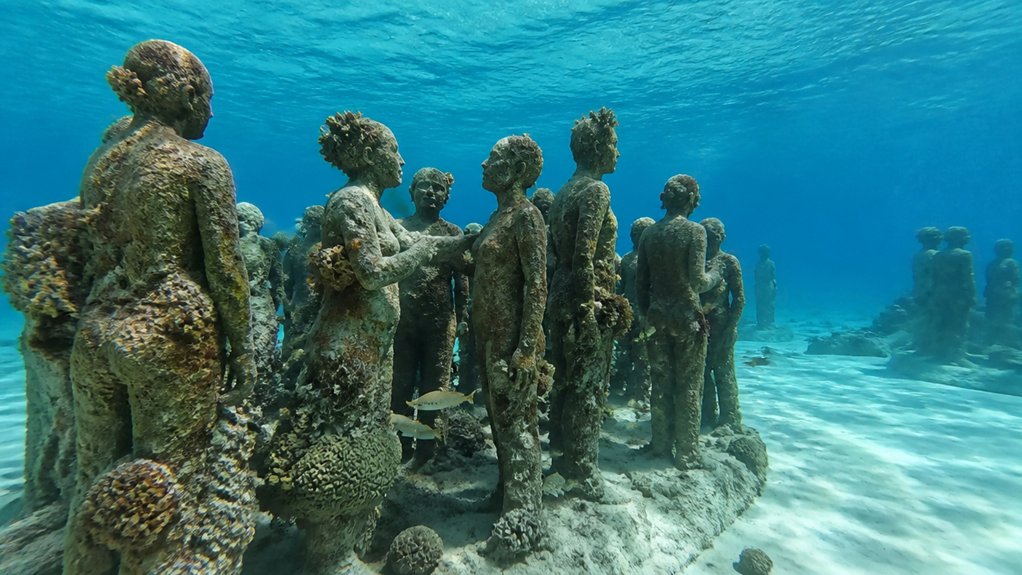
At first glance, MUSA’s statues look like a surreal art stunt, but they’re there for a practical reason. You’re seeing Musa work as an artificial reef that pulls visitors away from delicate coral at Manchones and Punta Nizuc. Since 2009, crews have placed more than 500 sculptures by Jason DeCaires Taylor and Mexican artists on sandy seafloors about 3 to 10 meters deep.
Those figures, cars, and household scenes are made from pH neutral marine concrete, so coral, algae, and sponges can latch on and grow. Fish and small invertebrates move in too, turning silent statues into busy neighborhoods. Visitors often include MUSA on Cancun snorkeling tours to see marine life gathering around the sculptures. You also get a message with the view: these human shapes ask how your choices affect the sea. Managed with park rules and monitoring, MUSA doubles as a conservation tool today.
Which MUSA Site Is Best for You?
That reef-saving idea also shapes the best way to see MUSA, because each site gives you a different kind of encounter. If you want easy surface views, Punta Nizuc fits you best. It’s shallow, simple for families, and ideal when you’d rather snorkel in MUSA than gear up.
- At Punta Nizuc, you float over calm, bright water while boats hum nearby.
- At Manchones Reef, a scuba dive gives you closer angles, clearer water, and room to linger.
- At Punta Sam or El Meco, you get a middle ground with enough depth for confident snorkellers or beginner divers.
Choose glass-bottom comfort for a surface-only trip. Choose Manchones Reef if you want detail, fewer surface crowds there, and don’t mind the ride from Cancún or Isla Mujeres. Nearby, Parque Nacional Arrecife de Puerto Morelos protects part of the Mesoamerican Barrier Reef System, the second largest barrier reef in the world.
What Will You See at MUSA?
Although people call MUSA an underwater museum, it doesn’t feel like a tidy gallery with everything lined up in one room. You’ll drift over sandy seabeds and spot clusters of underwater statues spaced far apart, with boat rides between sites. MUSA holds more than 500 life sized works by Jason DeCaires Taylor and Mexican artists, but your tour usually reveals only a few. You might circle Vicissitude, watch The Silent Evolution emerge from blue water, or find a tiny house and buried businessmen half claimed by the sea. The sculptures use marine concrete that invites coral growth, so surfaces look rough, chalky, and alive. Around them, you may catch snapper flashing past, plus the odd turtle or stingray, like extra curators on patrol nearby. If you also enjoy hidden natural attractions, Cancun is home to the underground river at Rio Secreto.
Still comparing MUSA Cancun Snorkeling Tour?
Ask for tour ideas, hotel suggestions, or a simple trip plan that combines both.
Trip Helper
How Deep Is the Cancun Underwater Museum?
You’ll find most of MUSA in the 3 to 10 meter range, with many sculptures set shallow enough that you can spot their pale shapes and sandy bases from the surface. If you’re snorkeling, Punta Nizuc sits especially close at about 2 to 4 meters, while deeper Manchones Reef sections reach around 8 to 10 meters and sometimes more for certified divers. Depth changes by gallery, tide, and visibility, so your operator will usually match the site to your skill level and keep the logistics pleasantly simple. Many visitors combine MUSA with reef snorkeling spots around Cancun to compare sheltered sculpture gardens with more natural coral-rich areas.
Typical Depth Range
Most visitors find that MUSA stays pleasantly shallow, with many of its best-known sculptures resting between about 3 and 6 meters, or 10 to 20 feet, below the surface. That depth feels friendly, especially for beginner divers, and you’ll still spot impressive details without going far down. Across most MUSA galleries, you’ll usually stay within roughly 3 to 10 meters. Many Cancun scuba tours include MUSA because its gentle depths make it one of the best introductory dive experiences in the area.
- At Punta Nizuc, statues appear in very shallow water, just 2 to 4 meters deep.
- Near Isla Mujeres, Manchones Reef drops farther, often 8 to 10 meters.
- On some certified-diver routes, the seafloor sinks to about 12 to 18 meters, and operators match the site to your skill and visibility conditions.
Snorkeling Vs Scuba
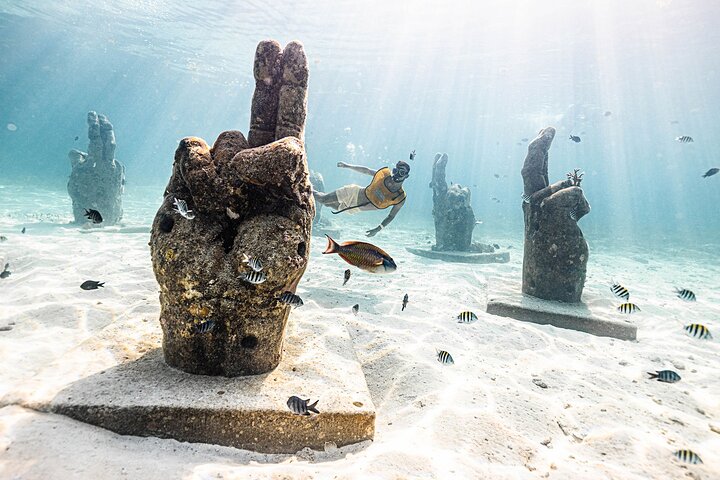
At MUSA, your experience changes a lot depending on whether you snorkel or scuba dive. If you choose Snorkeling, you’ll usually visit shallow areas like Punta Nizuc, where sculptures sit about 2 to 4 meters down. From the surface, you can spot shapes below you, bright fish, and patches of reef without much effort.
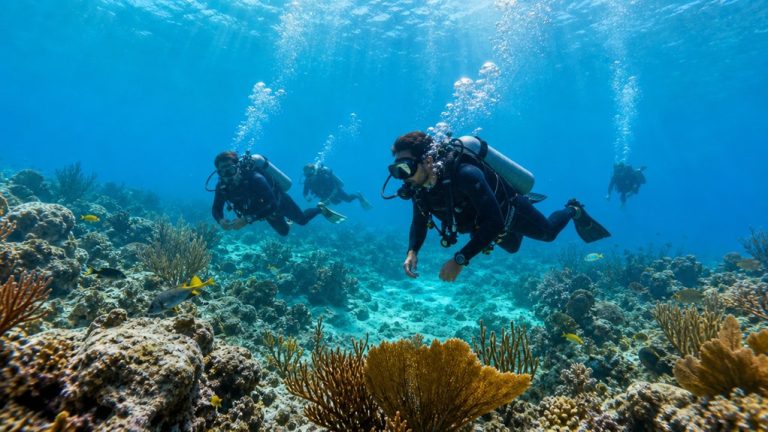
Scuba diving gives you a different feel. You descend into clearer views and move among more statues instead of peeking from above. That matters at Manchones Reef, where many MUSA works rest around 8 to 10 meters deep. Most snorkelers can’t see the details well there. If you want close-up looks at major installations, book Scuba diving or a Discover Scuba session. For an easier outing, snorkeling still delivers a fun, breezy first look. If you want to add more adventure to your trip, many travelers pair MUSA with a Coba Ruins day trip from Cancun.
Gallery Depth Zones
Because MUSA spreads across several gallery zones, the museum doesn’t sit at one neat depth. You’ll find sculptures from snorkel-friendly shallows to dive-ready blue water, usually between 3 and 10 meters, though some sections go deeper. Many visitors pair the museum with an Isla Mujeres day trip from Cancun for a full day on the water.
- At Punta Nizuc, you glide above figures in just 2 to 4 meters. Sunlight ripples over their faces like moving glass.
- At Punta Sam, the depths shift to about 7 to 10 meters. You can duck dive for a closer look or descend on scuba.
- At Manchones Reef, the flagship scenes rest deeper, often 8 to 10 meters and sometimes 12 to 18. Here, you hear your bubbles, spot details, and feel like you’ve entered an unusually quiet neighborhood. Boat type currents and visibility decide your best view.

Cancun Snorkeling Adventure with Transportation
Discover the underwater beauty of Cancún in one unforgettable snorkeling adventure. Explore four unique spots, incl...

Snorkeling Adventure at the Cancun Underwater Museum
Explore the enchanting Cancun Underwater Museum (MUSA) with a unique snorkeling adventure that showcases over 450 li...

Cancun Snorkeling Tour: Turtles, Reef, MUSA & Shipwreck
Discover five sides of Cancun’s underwater world in one snorkeling adventure: colorful coral at El Meco reef, MUSA...
Can You Snorkel MUSA Cancun?
Yes, you can snorkel MUSA Cancun, and it’s usually best in the shallow Punta Nizuc gallery where the sculptures sit about 2 to 4 meters below the surface in clear, sun-striped water.
That’s the easiest place to snorkel because you can spot figures from above without fighting depth or chop. Many tours pair Punta Nizuc with Manchones Reef, so you get statues first, then coral gardens. Some of the best Isla Mujeres tours from Cancun also include MUSA as part of a half-day snorkeling itinerary. Trips usually last 3.5 to 4 hours and leave from the Hotel Zone or Isla Mujeres. Expect around US$50 to US$99, sometimes plus a small conservation fee. Book a small-group operator and confirm the MUSA site before you pay. Winter and spring bring clearer views. Life vests and routes can limit duck-diving, so you may glimpse few sculptures.
Can You Scuba Dive MUSA Cancun?
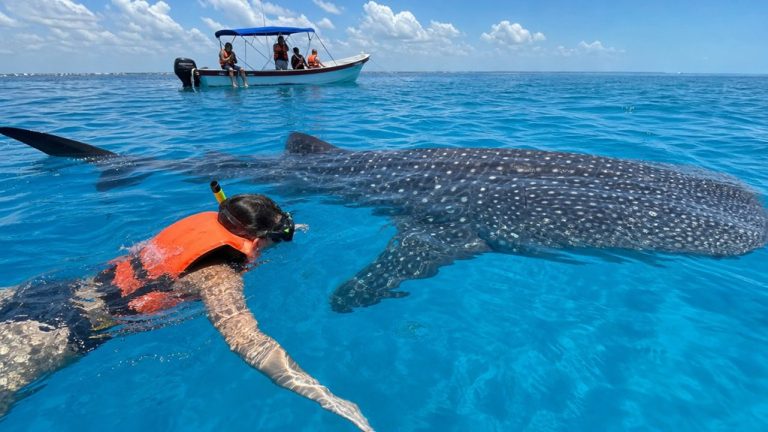
Scuba opens up more of MUSA than snorkeling can, and you can absolutely visit it on tanks. You’ll join a licensed operator from Cancún or Isla Mujeres and head out on a guided half-day trip. Main galleries sit around 3 to 10 meters, while Manchones can reach deeper sections for certified divers. If you’re new, Discover Scuba Diving lets you try a beginner-friendly MUSA scuba dive with close supervision. Many visitors pair this with other Cancún marine adventures, including seasonal whale shark tours.
- Picture pale human figures standing in blue water as grunts flicker past.
- Notice the rough marine concrete, already fuzzed with algae and tiny reef life.
- Hear your bubbles rise while The Silent Evolution appears out of the green.
Choose a small group, stay neutrally buoyant, and keep your hands off the art.
How Much Does MUSA Cancun Cost?
Most travelers can fit MUSA into their budget, but the price shifts a lot depending on how you want to meet those underwater statues.
| Option | Typical price | Notes |
|---|---|---|
| Snorkel trip | $50 to $99 | Usually 3 to 4 hours |
| Short boat snorkel | $69 to $91 | Faster, simpler outing |
| One-tank scuba diving | About $81 | Park fee often extra |
| Beginner or course packages | $142 to $559 | Intro sessions to multi-day |
Many visitors bundle MUSA into a broader Cancun catamaran cruise day, which can change the total price depending on sailing time and onboard extras. Certified scuba diving trips usually run about $136 to $165 for guided morning or 2-tank outings. Private charters can jump hard, sometimes around $750 for a small group. Before you book, check for tips, park fees, and ferry charges.
Which MUSA Tour Should You Book?

Narrow it down by how you want to see MUSA, because the right tour depends less on your budget than on whether you want an easy snorkel, a first dive, or real bottom time with the statues.
- Book the 4-hour Snorkel Tour at MUSA and Manchones Reef if you want the best mix of price, reef color, and sculpture sightings.
- Choose Discover Scuba if you’re new to diving and want patient instruction, bubbles in your ears, and guided time underwater.
- Certified divers should book a morning MUSA dive or 2-tank trip for close passes at Manchones, where figures rest 8 to 10 meters down.
For shallow water, ask for Punta Nizuc. Small-group tours earn stronger reviews, though they cost more and feel less crowded. If you want to pair your museum outing with more island activities later, Garrafon Park on Isla Mujeres is another popular stop for snorkeling and reef views.
When Is the Best Time to Visit MUSA?
If you want MUSA at its clearest, aim for the dry season from December to April, when calmer seas and bright water let you see the sculptures in crisp detail. This stretch is widely considered the best time to visit Cancun for consistently sunny weather and comfortable conditions. You’ll get smaller crowds and better prices in November or May, while summer gets busier with whale-shark trips and holiday travelers filling boats and snorkeling spots. No matter when you go, you’ll want an early-morning departure for smoother water, better photo light, and a quieter first look at those silent underwater figures.
Weather And Visibility
While MUSA is open year-round, the sweetest spot for clear water usually falls in the dry season from December to April. You’ll usually get the best visibility then, often around 15 to 30 meters, with calmer seas that let sculptures emerge like ghosts in blue glass. Water temperatures stay friendly too, from about 24°C in winter to 29°C in summer. Cancun’s weather by month patterns generally support these clearer, calmer conditions in the first part of the year.
- Go in the mornings, when the sea often looks smoother and the underwater light feels freshly polished.
- Expect rainier months to bring wind, chop, and murkier water after storms.
- Treat hurricane season, June to November, with flexibility. Conditions can change fast and tours may cancel.
If you want the museum at its sharpest, aim earlier in the year and earlier in the day.
Crowds And Seasonality
Usually, the best time to visit MUSA lands between December and April, when the water looks its clearest and tours run often, but you’ll share that sweet spot with plenty of other travelers.
Peak season December–April gives you the strongest visibility, yet it also brings bigger crowds, busier boats, and faster sellouts. If you want a calmer feel, choose weekdays and early-morning departures when the sea is often smoother and the docks sound less frantic. Summer from June to August adds local vacationers and whale-shark demand, so prices and group sizes can climb. Punta Nizuc usually feels more packed than Manchones Reef, where things often spread out. Tours leave year-round if weather cooperates, though rainy-season winds can blur views and shuffle schedules a bit. Seasonal Sargassum blooms across the Caribbean can also affect water clarity and beach conditions around Cancun, so it helps to monitor current reports before booking.
Snorkeling Vs Diving Timing
Season matters, but your best window at MUSA also depends on how you want to see it. Visit in the dry season, from December to April, when clearer water and lighter wind make the Underwater sculptures pop. Go early, too. Morning boats usually beat the chop, noise, and crowds. You can also pair your museum outing with cenote adventures from a Cancun cenote tours guide to round out a full day of underwater exploration.
- Snorkel shallow Punta Nizuc or Punta Sam in 2 to 4 meters, where sunlight flickers over statues like a mirror.
- Dive the deeper MUSA museum galleries at Manchones Reef in calm seas, when 15 to 30 meters of visibility lets you see faces, coral, and fish up close.
- If you’re considering Diving for Beginners, pick a morning one- or two-tank trip, or larger boats from Marina Puerto Cancún for a smoother ride.

Private Catamaran Tour to Isla Mujeres with Snorkeling from Cancun
Tours in Catamaran, Cancun. Private Catamaran Charters. Charter for 1-20 Pax Private Catamaran to Isla Mujeres. Sn...
Family Snorkeling Cancun with transportation
1st area: snorkel on a coral reef, full of fish and marine life with an 8-12 feet depth, warm water, and few or non...

Swim & Fly: Parasailing & Snorkeling from Cancun
Combine two completely different ways to experience the Caribbean in one package. Start with a parasailing flight ap...
How Do You Visit MUSA Responsibly?
Visiting MUSA responsibly starts before you even slip into the water. Book a licensed MUSA operator and pick a responsible, small-group departure. You’ll reduce crowding and hear instructions clearly.
| Do | Why | Note |
|---|---|---|
| Book licensed tours | Protects access | Follow routes |
| Choose small-group trips | Cuts impact | Calmer viewing |
| Use reef-safe sunscreen | Helps coral | Apply early |
| Keep hands and fins off | Prevents damage | Buoyancy matters |
Once you’re in, move lightly. Keep good buoyancy, avoid fin kicks, and don’t touch sculptures or baby coral. These concrete figures look tough, but they’re still fragile homes in progress. Don’t hover over coral clouds or statues, and take every bit of plastic and rubbish back to the boat. Bring pesos to tip the crew, too.
What to Know Before Visiting MUSA Cancun
Before you book, know that MUSA isn’t a beach you wander into on a whim. You’ll reach the Museo Subacuático de Arte only with a licensed operator, whether you choose snorkelling, a beginner scuba dive, a certified trip, or a glass-bottom boat. Half-day tours usually run about US$50 to $165, plus a small marine-park fee. It opened in 2010 with purpose.
- At Punta Nizuc, you float over pale figures in 3 to 10 meters of water, with sun flicker and fin sounds around you.
- At Manchones Reef, divers find deeper galleries and often extra fish on the artificial reef.
- Visit December to April for calmer seas and clearer views. Bring reef-safe sunscreen, don’t touch the sculptures, and watch your buoyancy. Clumsy kicks aren’t art.
Frequently Asked Questions
Are There Age Restrictions for MUSA Tours?
Yes, you’ll find age limits for MUSA tours: snorkeling often starts around 5–8, intro dives at 10+, and some trips require older teens. You should verify guardian requirements, child pricing, and infant policies before booking.
Do I Need Strong Swimming Skills to Visit MUSA?
You don’t need strong swimming skills for MUSA; you can snorkel shallow areas, try beginner dives, or choose glass-bottom boats. Check wetsuit fit, practice entry techniques, use easy shore access, and watch water clarity conditions.
Can Non-Divers Still Take Underwater Photos at MUSA?
Absolutely, telegraph-style, you can capture underwater photography at MUSA without diving by joining guided snorkeling to shallow exhibits. Bring waterproof gear, follow your guide, and you’ll get shots while respecting conservation rules and depth limits.
Are MUSA Tours Suitable for Travelers Prone to Seasickness?
Yes, you can take MUSA tours if you’re prone to motion sickness, but you’ll need medication options, a smart timing schedule, and strategic onboard seating to stay comfortable, especially on faster boats or longer routes.
Is MUSA Accessible for Visitors With Mobility Limitations?
Yes, you can visit MUSA with mobility limitations if you confirm wheelchair access, boat boarding help, accessible pathways, and assistive equipment in advance; you’ll do best on glass-bottom or larger catamaran tours, not snorkeling trips.
Conclusion
At MUSA, you don’t just tick off a snorkel stop. You glide past silent faces, pale coral buds, and schools of fish that move like silver confetti. One site feels almost Atlantis, yet the rules stay simple: book a licensed morning tour, pick a small group, and keep your fins gentle. If Cancun’s beaches are the overture, this underwater gallery is the hidden verse you’ll remember long after the boat ride back at sunset ends.
Cancun Submarine and Optional Snorkeling Tour
This semi-submarine offers a front-row seat to the Nichupté Lagoon and Punta Nizuc Reef. Choose between two exciting options: Option 1: Subsee Explo...

Speed Through Cancun: Explore Mangroves, Reefs & MUSA in One Tour
Experience Cancun Like Never Before! Get ready for the ultimate adventure on the turquoise waters of Cancun! With...

Speed boat tour with snorkel adventure in Cancun
Discover Cancun Like Never Before! Get ready for the ultimate thrill on the Caribbean waters! With our Speedboat &...

The Best catamaran to Isla Mujeres, open bar and lunch in Cancun
Experience an unforgettable day on our family-friendly Catamaran Tour to Isla Mujeres, with convenient round-trip tr...
Experiences to explore
 Explore experience ↗
Cancun Snorkeling Tour: Turtles, Reef, MUSA & Shipwreck
◷ 3 hr 30 min
Discover five sides of Cancun’s underwater world in one snorkeling adventure: colorful coral at El Meco reef, MUSA’s underwater sculptu
From $109.65 USD
View dates Explore experience ↗
MUSA Diving For Beginners in Cancun
◷ 6 hr
MUSA Cancun is a very successful conservation project, one of the first of its class. In order to maintain the natural reefs, the local
See dates for Current pricing
View dates Explore experience ↗
Scuba Dive at Musa Cancun for Certified Divers
◷ 5 hr
The underwater world of MUSA Cancun offers an extraordinary blend of art and marine conservation, making it a premier dive destination
See dates for Current pricing
View dates