
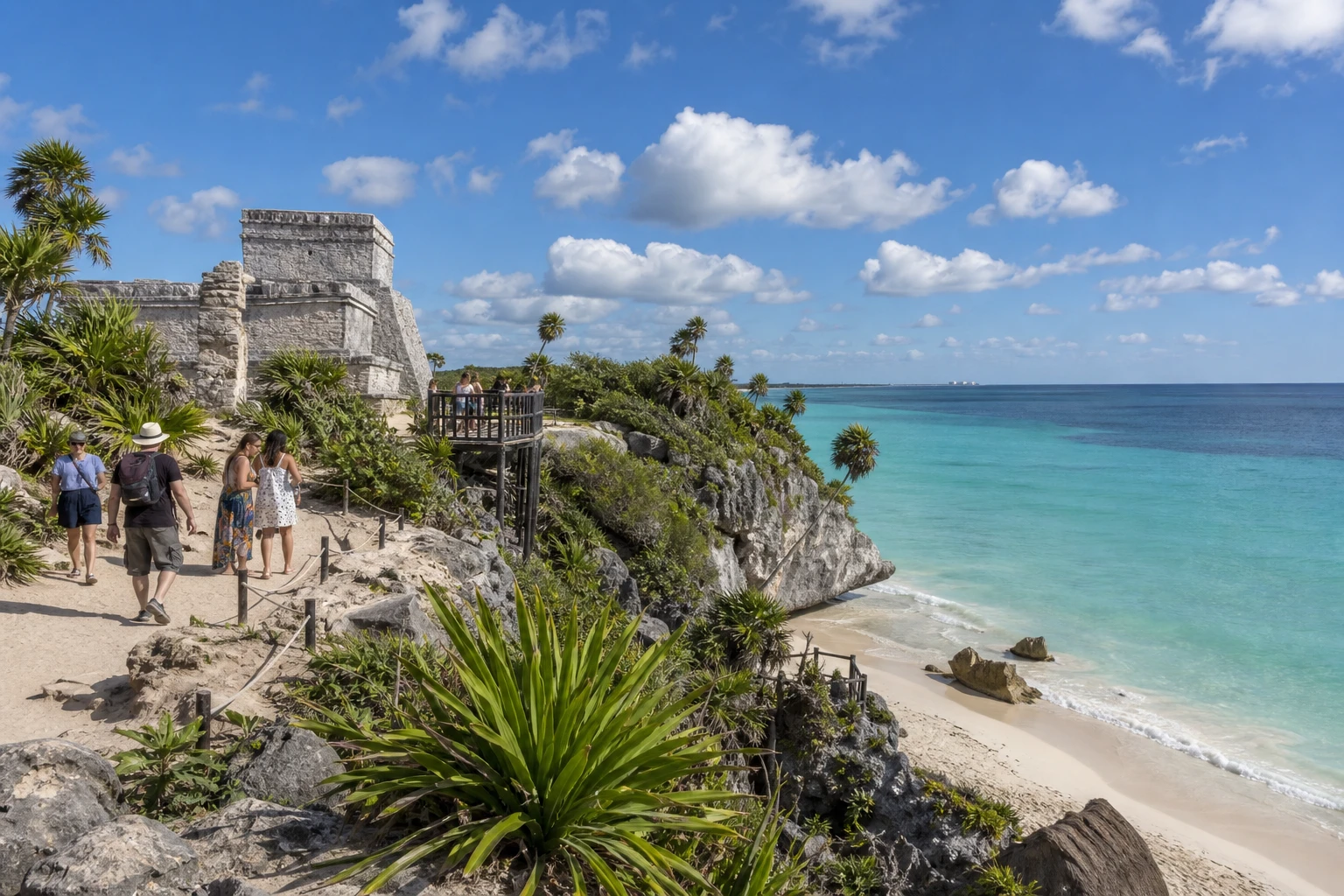
Tulum and Cenote Tour From Cancun
Plan a Tulum and cenote tour from Cancun with practical guidance on itinerary order, transport, admission costs, package inclusions, accessibility, packing, and choosing the right excursion.
A Tulum and cenote tour from Cancun pairs two very different experiences in one road trip: time inside an archaeological zone and a later swimming stop. The combination is convenient, but the quality of the day depends on sensible sequencing and clear package details. Visit Tulum first, leave room for its final-entry cutoff, and treat the cenote portion as a separate activity whose rules and facilities depend on the location selected.
- Schedule Tulum before the cenote so the ruins are not squeezed against the final-entry cutoff.
- Check the confirmed pickup point and departure time before planning breakfast or evening activities.
- Verify whether archaeological admission and cenote entry are included in the advertised tour price.
- Confirm the exact cenote, swim rules, equipment, facilities, and non-swimmer arrangements.
- Ask about mobility needs before booking because accessibility varies between the ruins, transport, and cenote.
Is a combined Tulum and cenote tour worth it?
The combined format works best for travelers who want one organized day rather than separate transport and ticket arrangements. A bundled road tour can handle the Cancun to Tulum journey, place the archaeological visit before the swim, and keep both stops within one itinerary. Its main tradeoff is reduced control over the cenote chosen and the amount of time spent at each place.
Independent travel offers more freedom to choose a cenote and set your own pace, but it requires closer attention to routing, tickets, and the Tulum entry deadline. For a ruins-focused alternative without the swimming component, compare the broader planning advice in the Tulum Day Trip From Cancun guide.
| Option | Best for | Main limitation |
|---|---|---|
| Organized combined tour | Travelers who prefer coordinated transport and a preset sequence | Less control over the cenote and time at each stop |
| Private tour | Groups seeking a more adjustable schedule | Price and inclusions depend on the selected provider |
| Independent trip | Travelers who want to select their own cenote and pace | More responsibility for transport, tickets, and timing |
The best order is Tulum first and the cenote second
Tulum should come first because the archaeological zone operates daily from 8:00 a.m. to 5:00 p.m., with final entry at 3:30 p.m. A late start or an unexpectedly long swim could otherwise put the ruins out of reach. Placing the cenote afterward creates a useful timing buffer and keeps the fixed cutoff at the center of the plan.
- Leave Cancun at the time shown in the booking confirmation.
- Reach Tulum with a comfortable margin before the 3:30 p.m. final entry.
- Complete the archaeological visit before moving on to lunch or swimming.
- Eat outside the archaeological zone because food cannot be taken inside.
- Continue to the confirmed cenote and follow its current swimming instructions.
- Return to Cancun according to the operator's stated schedule.
The route from Cancun follows the Cancun to Playa del Carmen and Federal Highway 307 corridor toward Tulum. Do not build the day around a generic journey estimate. Road conditions, pickup patterns, and the chosen itinerary affect timing, so use the departure and return information supplied for the actual booking.
What to expect during the Tulum archaeological visit
The Tulum portion centers on the archaeological zone rather than an unrestricted wander through the wider destination. INAH lists toilets, guided visits, and accessibility services at the site. The amount of interpretive detail depends on the tour format, so check whether the package includes a guide, provides only transport, or allows independent time inside.
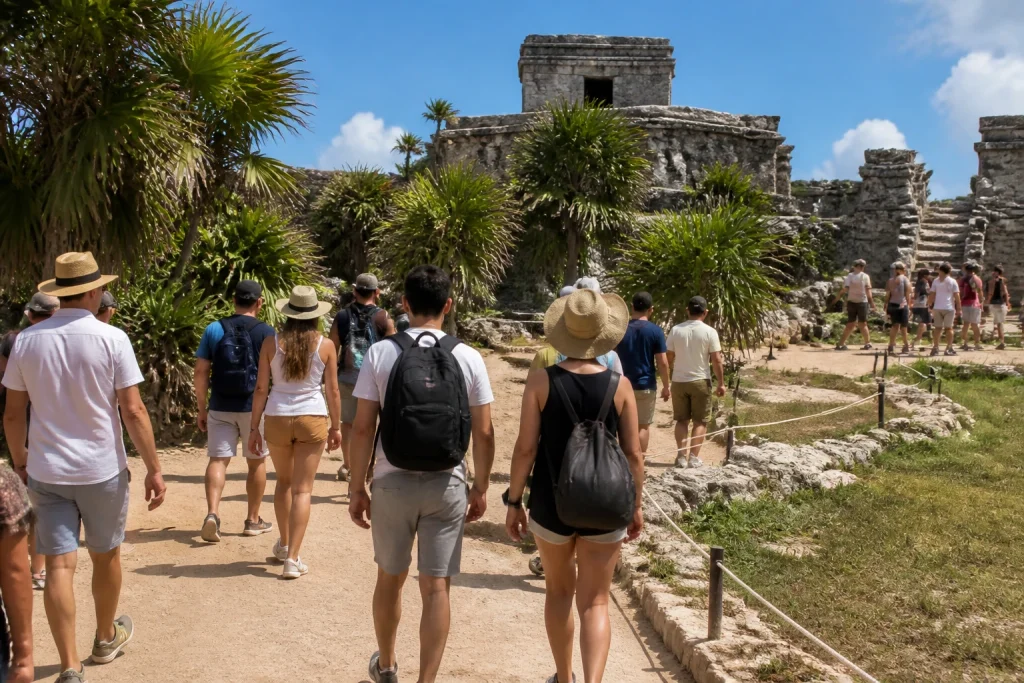
Site rules deserve attention before packing the day bag. Smoking, food, and pets are not allowed inside Tulum. Professional cameras can carry a separate charge, so travelers bringing substantial photography equipment should check the current rule before arrival. Keeping the bag compact also makes the transition between archaeological sightseeing and swimming simpler.
Build a little flexibility into the visit rather than treating every minute as fixed. Guided commentary, entry procedures, and movement through the site all consume time. The important boundary is the official final-entry cutoff, not a seller's broad description such as “morning visit” or “early departure.”
Choose the cenote stop by its confirmed facilities and rules
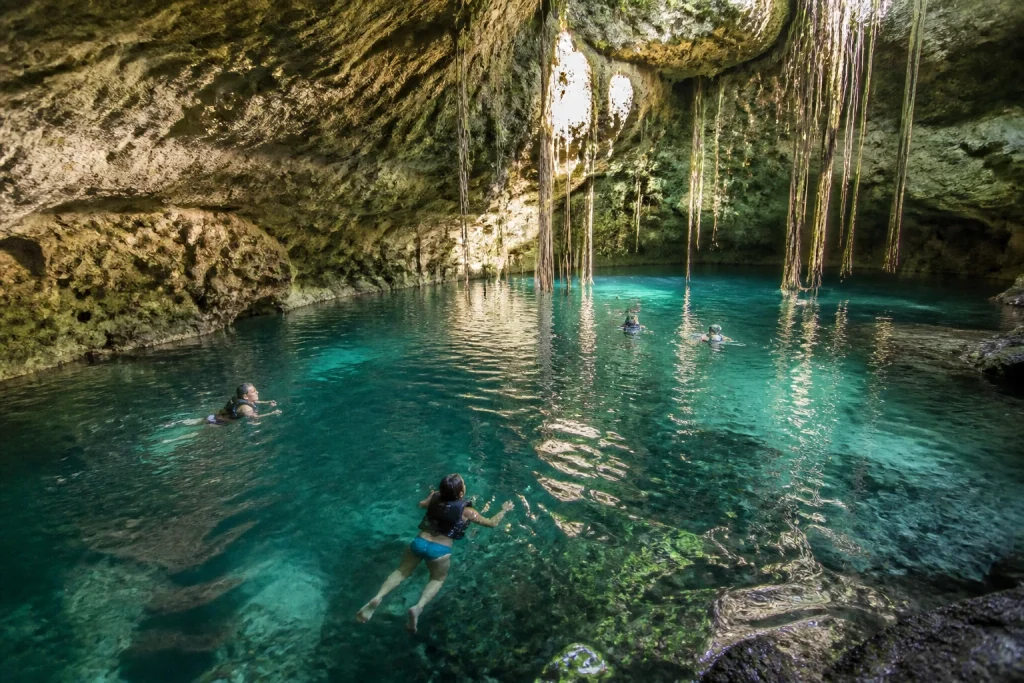
The word “cenote” in a tour title is not enough to evaluate the swimming portion. The listing should identify the location and explain what visitors receive there. Do not assume that entry, life jackets, lockers, towels, showers, or a particular amount of swim time are included unless the package says so.
- What is the cenote's name and current operating status?
- Is cenote admission included in the tour fare?
- Are life jackets required, available, or included?
- Are lockers, changing areas, toilets, and showers available?
- What arrangements exist for children and non-swimmers?
- What sunscreen, camera, and personal-item rules apply?
- How much time is allocated for changing and swimming?
These details can differ by cenote and ticket type. A photo of clear water does not answer practical questions about entry steps, depth, flotation equipment, or secure storage. Confirm the current rules for the named venue, especially if anyone in the group has limited swimming confidence or mobility concerns.
Travelers considering a specific independent swimming stop can also use the Cenote Azul From Cancun Guide to compare that subject with the convenience of a bundled tour. Keep the comparison focused on transport, schedule, and confirmed facilities rather than assuming every cenote operates in the same way.
Still comparing Tulum Cenote Tour?
Ask for tour ideas, hotel suggestions, or a simple trip plan that combines both.
Trip Helper
How to compare Tulum and cenote tour packages
Start with the itinerary details, not the headline photograph. A useful listing should identify the pickup area, archaeological arrangements, cenote, meals, equipment, and likely return window. If those basics are vague, comparing two prices tells you very little because the packages may cover different expenses.
| Package detail | What to look for |
|---|---|
| Pickup | Exact meeting area, pickup window, and return information |
| Tulum visit | Guided or independent format and time allocated at the site |
| Archaeological tickets | Clear wording that states whether current required charges are included |
| Cenote stop | Named venue rather than a generic promise |
| Swimming equipment | Specific information about life jackets, lockers, and towels |
| Food and drinks | What is provided and when it is served |
| Extra charges | Any mandatory fees not covered by the base fare |
| Cancellation terms | Rules for changes, weather disruption, and missed pickup |
Group size also changes the character of the day even when the stops are identical. A private booking can offer greater scheduling control, while a shared excursion follows a common timetable. Avoid assuming that “private” automatically covers admission or equipment. Inclusions still depend on the package description.
Tulum admission prices require a careful check
A federal tourism announcement dated July 17, 2026 stated that the combined archaeological-zone and natural-protected-area price would be MX$265 for international visitors and MX$80 for Mexican nationals. It also announced free Sunday entry for Mexican nationals, free entry to Parque del Jaguar, and beach access without an admission payment.
Published official information remains inconsistent, however. INAH visitor material still displays a separate MX$210 archaeological charge for foreign visitors alongside other listed charges, while older material shows another structure. Because implementation and ticket structure can change, check the current official point-of-sale amount and compare it with the exact admission wording in the tour listing.
This discrepancy matters most when a tour advertises “transport included” but says little about entry. Treat archaeological admission as included only when the package states that clearly. Apply the same rule to the cenote, since its entry charge and optional facility costs depend on the selected venue.
| Potential expense | Question to answer before booking |
|---|---|
| Tour fare | Which transport, guiding, and stops does the base price cover? |
| Tulum admission | Are all currently required site charges included? |
| Cenote admission | Is entry to the named cenote part of the fare? |
| Swim equipment | Are flotation equipment, lockers, and towels included or extra? |
| Meals | Is food provided, and at what point in the itinerary? |
| Photography | Could professional camera equipment trigger an additional site charge? |
Plan the Cancun pickup and return before the tour day
Tulum is reached from Cancun by road along the Highway 307 corridor. Exact journey duration should come from the selected transport provider rather than a universal estimate. Hotel location, shared pickups, traffic, and the operator's stop pattern can all affect the working schedule.
Read the confirmation as soon as it arrives. Note whether pickup is at the hotel, a designated meeting point, or another location. Then check the return information before making dinner reservations or scheduling an evening activity. A combined archaeological and swimming itinerary deserves a clear day in the calendar.
Visitors organizing the rest of their vacation without their own vehicle can use the Cancun Itinerary Without a Rental Car for broader transport planning. For this excursion, the simplest choice is usually the one that clearly explains both ends of the journey rather than leaving the return arrangements vague.
What to pack for ruins and swimming in one day
Pack for two activities while keeping the day bag manageable. Clothing and footwear should work for walking, vehicle transfers, and changing for the water. Check the chosen cenote's rules before applying or carrying products that could be restricted there.
- Comfortable walking shoes with reliable grip
- Swimwear and a dry change of clothes
- A towel if the package does not provide one
- Sun protection suitable for the archaeological visit
- A reusable water container if permitted by the current venue rules
- Required identification and booking confirmation
- A waterproof pouch for small personal items
- Only the camera equipment you are prepared to carry and declare if required
Plan meals around the archaeological stop because food cannot be taken into Tulum. If the package includes lunch, check when it is served. Otherwise, make sure the schedule provides a realistic opportunity to eat after leaving the site rather than relying on snacks inside.
Accessibility must cover the full itinerary, not only Tulum
INAH identifies accessibility services at Tulum, but that label does not describe continuous step-free routes, terrain, mobility-device availability, or transfers between the entrance and tour vehicle. Travelers with mobility requirements should confirm the actual route and the assistance provided by the selected operator.
The cenote needs a separate assessment. Ask about the path to the water, steps, handrails, changing facilities, seating, and options for companions who do not swim. A tour is only as accessible as its least accessible transfer or stop, so a general accessibility symbol should not replace venue-specific details.
Also consider the practical transfer sequence. Boarding the vehicle, moving through the archaeological zone, changing clothes, and entering the swimming area involve different needs. Give the provider a clear description of required assistance before booking rather than waiting until pickup.
Families and non-swimmers should examine the cenote portion closely
A combined excursion can fit a family itinerary when the schedule, walking, and swimming arrangements suit every participant. Age rules, flotation requirements, supervision, and water access depend on the chosen cenote and operator. Confirm those points before paying, especially when traveling with young children.
Non-swimmers should not assume that every cenote offers an easy shallow area or suitable viewing space. Ask whether entering the water is optional, whether flotation equipment is available, and where non-swimming companions can wait. These answers determine whether the second half of the tour feels inclusive or simply becomes a long pause.
The Cancun With Kids Guide can help families place this longer outing within a broader vacation plan. Avoid scheduling another demanding activity immediately afterward until the confirmed return window is known.
A practical booking checklist
- Confirm the exact pickup location, departure window, and expected return information.
- Check that Tulum is scheduled early enough to clear the 3:30 p.m. final-entry cutoff.
- Identify every admission charge included in the tour price.
- Confirm the cenote's name, facilities, rules, and swimming equipment.
- Review meal timing, camera rules, accessibility arrangements, and age restrictions.
- Read cancellation and missed-pickup terms before completing payment.
Save the final confirmation where it can be opened without difficulty on tour morning. Recheck the meeting point, required identification, and any last instructions about clothing or personal items. This small step prevents a polished itinerary from unraveling before the vehicle leaves Cancun.
Who should book this tour?
A Tulum and cenote tour from Cancun is a strong choice for travelers who value coordinated transport and want archaeological sightseeing plus swimming in one outing. Its main limitation is the fixed structure, particularly when the cenote or time allocation is chosen by the provider. Independent planning is better for visitors who care most about selecting a particular swimming venue or controlling every hour.
Before booking, focus on three points: Tulum must come first, the admission wording must be explicit, and the named cenote must suit the group. Once those details are settled, the excursion becomes much easier to evaluate on its real merits rather than its headline price.
Frequently asked questions
How long does a Tulum and cenote tour from Cancun take?
The total duration depends on the pickup location, operator schedule, time at Tulum, and cenote selected. Keep the day clear until the booking confirmation provides the departure and return information rather than relying on a generic transfer estimate.
Should a combined tour visit Tulum or the cenote first?
Tulum should be visited first. The archaeological zone is open from 8:00 a.m. to 5:00 p.m., with final entry at 3:30 p.m., so scheduling the swim afterward reduces the risk of missing the site cutoff.
Is Tulum admission included in a cenote tour from Cancun?
Admission is included only when the selected package states that clearly. Official pricing information has recently shown conflicting ticket structures, so compare the listing with the current official point-of-sale terms before booking.
What is the current Tulum archaeological zone admission price?
A July 17, 2026 federal announcement stated a unified price of MX$265 for international visitors and MX$80 for Mexican nationals. INAH visitor information still displayed a different structure, so confirm the amount and included components immediately before visiting.
Does every cenote tour include life jackets and lockers?
No universal inclusion should be assumed. Life jackets, lockers, towels, changing facilities, and related charges depend on the cenote and package, so check the listing for the named venue.
Can non-swimmers join a Tulum and cenote tour?
Non-swimmers can consider the excursion, but suitability depends on the chosen cenote. Confirm flotation equipment, water access, supervision rules, and the waiting area for anyone who prefers not to swim.
Is Tulum accessible for travelers with limited mobility?
INAH lists accessibility services at Tulum, but it does not specify continuous step-free access, terrain, mobility equipment, or transfer arrangements. Confirm the full archaeological route, vehicle boarding, and cenote access before booking.
Can food be taken into the Tulum archaeological zone?
No. INAH lists food entry as prohibited, so plan to eat before entering or after leaving the archaeological zone.
Can I visit Tulum and a cenote independently from Cancun?
Yes, independent travel provides greater control over the cenote and time at each stop. The road route follows the Highway 307 corridor, but travelers must manage transport, tickets, venue rules, and Tulum's final-entry deadline themselves.


