
El Rey Ruins Cancun Guide
Plan a quieter Cancun escape at El Rey Ruins, where iguanas outnumber crowds and one small detail could change how you visit.
If Cancún’s beach scene feels a little too lively, El Rey gives you a calmer kind of company. You can walk past weathered stone temples, low plazas, and a stepped pyramid while iguanas sun themselves like they own the place, all right on Boulevard Kukulcán. It’s easy to reach, quick to explore, and surprisingly rich for such a small site, which raises a useful question before you go.
Key Takeaways
- El Rey Ruins is a compact Postclassic Maya site in Cancún’s Hotel Zone, with 47 structures along the Nichupté Lagoon near Playa Delfines.
- Highlights include El Castillo pyramid, columned buildings, plazas, and abundant iguanas, revealing the site’s ceremonial, administrative, trade, and burial roles.
- Plan about 45–60 minutes to visit; arrive early or after 3:30 PM for cooler weather, fewer crowds, and better light.
- The site typically opens 8:00 AM–5:00 PM, with last entry around 4:30 PM; adult admission is usually about 75 MXN.
- Reach El Rey easily by Hotel Zone red bus, taxi, or car; bring water, sunscreen, a hat, and sturdy walking shoes.
Is El Rey in Cancun Worth Visiting?

If you want a quick dose of Maya history without giving up your whole day, El Rey is absolutely worth visiting. In the Cancun Hotel Zone, this compact Mayan archaeological site lets you explore in about an hour, so it fits easily into a beach day or half-day outing. At El Rey Ruins, you’ll spot weathered stone structures, broad platforms, and plenty of iguanas acting like they’re in charge. The setting adds extra appeal. You get lagoon breezes, glimpses of the sea, and Playa Delfines right next door. It’s affordable too, with a modest entry fee and easy bus access. If you’re curious but crowd-averse, this stop gives you real atmosphere, tangible history, and just enough adventure before lunch and a swim nearby later. Archaeological evidence suggests El Rey, together with nearby San Miguelito, formed part of a maritime trade and fishing settlement on Cancún Island.
What Is El Rey Archaeological Zone?
You’ll find El Rey Archaeological Zone on Cancun’s Hotel Zone island, a small Postclassic Maya site named after a stone mask called The King that turned up here in 1923. As you walk the compact grounds, you’re seeing a place that started around 300 CE and grew most between 1300 and 1550 as a busy fishing settlement and coastal trade hub. You can still picture that working past in its pyramids, columned buildings, and plazas, with iguanas now ruling the paths like tiny scaly guards. Many visitors pair it with a stop near Playa Forum Cancun while exploring the Hotel Zone.
Site Identity And Name
Think of El Rey Archaeological Zone as Cancun’s quieter ancient side: a compact Maya site stretched along the Nichupté Lagoon on the Hotel Zone island, where sea trade, ceremony, and daily life once met in a long, narrow strip of stone.
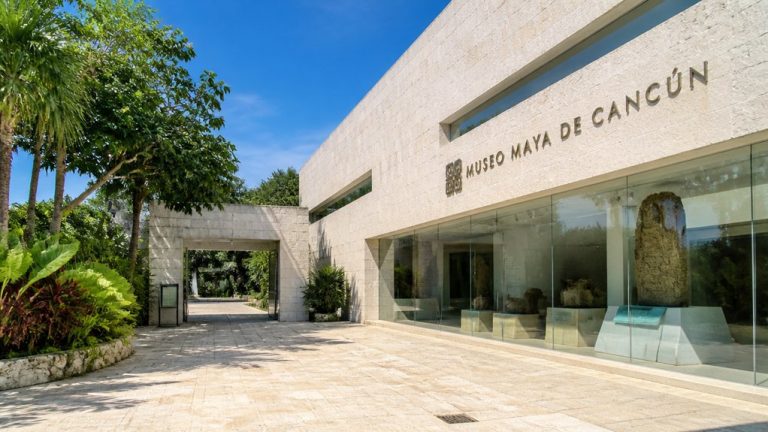
When you visit El Rey, you’re seeing 47 structures in a slim 520-by-70-meter layout, including El Castillo and columned buildings. The modern name El Rey, not the original name, came from a sculpted stone “King” mask found here in 1923. It now sits in the Museo Maya de Cancún, a key place for understanding the region’s archaeological finds. If you notice Rey Mayan on tours, treat it as a label. You’ll find the site easy to grasp at a glance, with spaces, lagoon views, and a shape that helps you orient fast.
History And Purpose
Although El Rey looks compact at first glance, it was far more than a quick stop of old stone on Cancun’s Hotel Zone. As you walk its narrow layout, you’re seeing a small Postclassic Mayan center with roots around 300 CE and its busiest years from 1300 to 1550. El Rey handled coastal trade through calm lagoon waters, linking canoes and merchants with Xel Ha, Tankah, Tulum, and Xaman Ha. You can also read bigger ambitions here. Structure 2, with its stepped pyramid and temple rooms, points to ritual power, and a royal burial lay beneath its floor. Nearby columned buildings suggest administration, learning, and sky watching tied to wider Maya networks. In short, this site worked like a port, classroom, and cemetery all at once. After exploring the ruins, many travelers continue on to Cancun’s best beaches for a fuller look at the area’s most scenic coastline.
Still comparing El Rey Ruins?
Ask for tour ideas, hotel suggestions, or a simple trip plan that combines both.
Trip Helper
Where Is El Rey Located?
Along Boulevard Kukulcán in Cancún’s Hotel Zone, El Rey sits at about kilometer 17.5 to 18 on the Nichupté Lagoon side of the island. You’ll find the ruins just inland from Playa Delfines, where the sea breeze fades and low stone structures rise behind roadside greenery. El Rey is easy to spot from the main avenue, and the setting feels surprisingly calm for the busy Hotel Zone.
If you look around, you’ll notice the Cancún Maya Museum located just north, less than a mile away. That makes the area feel like a compact pocket of Maya history in modern Cancún. You’re surrounded by resorts, traffic, and bright sun, yet El Rey holds its ground with weathered stones, open paths, and plenty of iguanas acting like they own the place. Just across from the site, Playa Delfines adds a dramatic stretch of Cancún shoreline nearby.
How Do You Get to El Rey?

You can reach El Rey easily whether you’re driving down Boulevard Kukulcan or hopping on a red Hotel Zone bus toward Playa Delfines. If you’ve got a car, you’ll spot the ruins around km 17.5 to 18 on the lagoon side, and you can park in the public lot west of the site or near the beach. If you’d rather skip traffic, you can grab a taxi, rideshare, or a 12 MXN bus from downtown Cancun and step off just a short walk from the stone walls and watchful iguanas. If you’re staying nearby, getting around Cancun without a car is simple thanks to frequent buses and easy taxi access throughout the Hotel Zone.
Driving And Parking
If you’re driving to El Rey, the route is simple once you’re in Cancun’s Hotel Zone. Follow Av. Kukulcán toward kilometer 17.5 to 18 and watch the lagoon side. The ruins sit near Playa Delfines, easy to spot just after the big Playa Delfines parking lot if you’re coming south from the north Hotel Zone. Coming north from Punta Nizuc, you’ll see the site on your left just before Playa Delfines, after a Subway and Go Mart. From downtown Cancun or the airport, take Highway 307 to the Kukulcán exit, then continue onto Av. Tulum and Av. Kukulcán. Plan on about 20 to 30 minutes from downtown, traffic willing. Parking sits west of the site, so arriving by rental car feels pleasantly easy enough. Since this stretch follows the long Hotel Zone corridor, keeping an eye on kilometer markers makes navigation much easier for first-time visitors.
Bus And Taxi Options
Not driving? You’ve got easy ways to reach El Rey. The simplest is the red Hotel Zone city bus. Bring about 12 MXN in cash, ride south on Boulevard Kukulcán, and hop off at Playa Delfines. From there, you’ll walk a few minutes to El Rey at km 17.5 to 18, with sea breeze and traffic humming nearby.
If you arrive on an ADO bus, head to Cancun’s central station, then grab a city bus or taxi into the Hotel Zone. For a smoother trip from the airport, planning your Cancun Airport transportation ahead of time can make getting into the Hotel Zone much easier. Coming from downtown, a taxi or ride-share usually takes 20 to 30 minutes and can drop you right by the entrance near Playa Delfines. Taxis are easy to find, especially in the Hotel Zone, but confirm the fare or meter first. Late-night prices can creep upward a bit.
What Are El Rey Hours and Fees?
Usually, El Rey keeps a simple schedule that makes planning easy: the ruins open daily around 8:00 AM and close about 5:00 PM, with last entry often set near 4:30 PM. If you like cooler air and quieter paths, arrive early and give yourself a relaxed visit. The Entrance fee for adults is usually about 75 MXN, or roughly $4 USD. Children often enter free, and Sundays may be free for Mexican citizens and residents with valid ID. El Rey accepts cash, cards, and Apple Pay, but carrying small bills helps. If you bring video gear, expect an extra charge of about 50 MXN, while tripods or drones need permits. Since the Ruins located in Cancun shift hours slightly, check INAH before you go. After your visit, you can continue exploring Downtown Cancún to experience more local vibes and city spots beyond the Hotel Zone.
What Will You See at El Rey?
Once you’ve sorted out hours and tickets, the fun part is seeing how much El Rey packs into a small strip of land. You’ll walk through 47 structures spread across a long, narrow site, with low platforms, little temples, and old causeways setting the scene. The Main plaza stands out first. It’s framed by columned buildings and a sturdy twin chamber temple that still feels surprisingly intact. Then you’ll spot Structure 2 (El Castillo), a compact three level pyramid with a summit temple and a ruler’s burial tucked below. Like the Coba ruins, El Rey offers a fascinating look at how ancient Maya sites can be explored on an easy day trip from Cancun. Beyond the stonework, El Rey feels alive with indigenous trees, birdsong, and plenty of green iguanas sunning themselves like tiny scaly landlords. The original carved King mask now lives at nearby Museo Maya de Cancún.
How Long Should You Spend at El Rey?
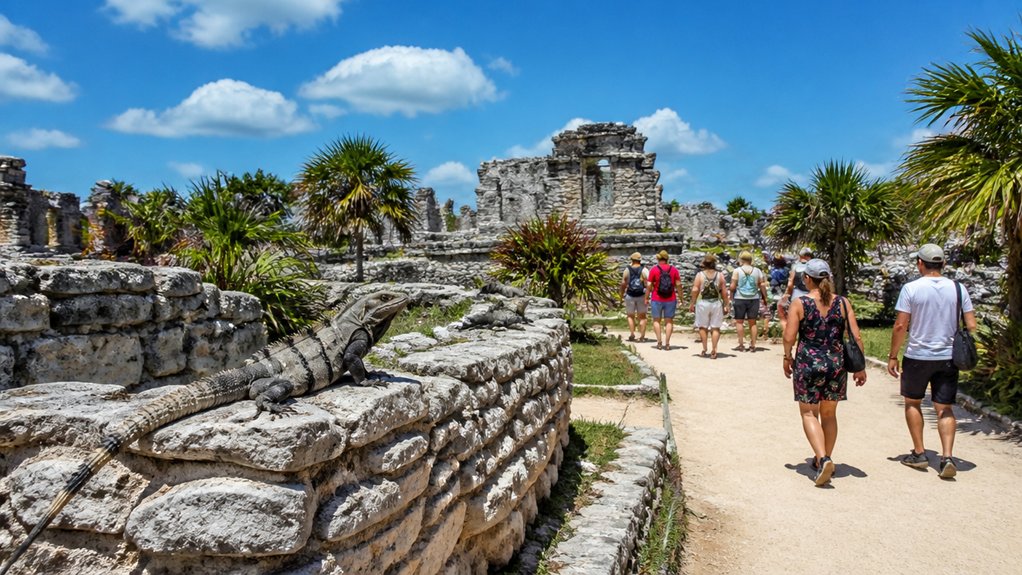
Set aside about 45 to 60 minutes for El Rey, and you’ll have enough time to stroll its compact 520-by-70-meter site without rushing past the good parts.
You can see the main plaza, climb your eyes over Structure 2, and pause for the resident iguanas, who often look like they’re supervising the place.
Add 15 to 30 minutes if you’re heading to Playa Delfines or walking the lagoon edge right after.
If you plan to pair El Rey with the San Miguelito ruins and the Mayan Museum of Cancun, give yourself 2.5–4 hours total.
For first timers, staying in Cancun’s Hotel Zone can make it easier to pair El Rey with other nearby sights in one outing.
Leave a little buffer too. Ten to fifteen extra minutes covers photos, restroom stops, and tickets without turning your visit into a sprint in the tropical sun and salt air.
When Is the Best Time to Visit?
When should you go? The best time to visit El Rey is right when it opens, around 8:00 to 9:00 AM. You’ll beat the heat, share the paths with fewer people, and catch the iguanas at their liveliest. Weekday mornings outside holidays feel especially calm. Stones warm slowly, birds chatter, and the ruins seem to wake up with you.
Late afternoon, around 3:30 to 4:30 PM, also works well if you want cooler air and softer light for photos. Just watch last entry, usually 4:30 PM before the 5:00 PM close. Try to avoid 11:00 AM to 3:00 PM in hotter months, when shade is scarce. After you visit El Rey, head to Playa Delfines or nearby Museo Maya de Cancún for a smart mid-morning cultural detour. As with most of the Hotel Zone, tourist areas around El Rey are generally considered safe, especially during the day.
What Should You Bring to El Rey?
Pack for sun first, because El Rey feels bright and open from the moment you step onto the paths. Bring sunscreen, a wide-brim hat, and sunglasses, since shade is scarce and the visit often lasts about an hour.
- Carry at least 1 liter of water per person, and more in hotter months.
- Wear closed-toe walking shoes or sturdy sandals for uneven stone and the site’s 520 m walk.
- Bring a camera or phone for easy photos. If you plan video or pro gear, expect an extra fee or permit.
Add insect repellent too. Mangroves sit nearby, and bugs sometimes get curious. A light layer or scarf helps when breezes shift off the lagoon. Your feet will thank you before second ruin. If you cool off later at Cancun public beaches, keep your beach basics handy so you do not have to repack after the ruins.
What Else Can You Do Near El Rey?
After El Rey, you can walk to Playa Delfines for white sand, bright turquoise water, and a swim that feels like a reward. If you’re curious about the bigger story, head three minutes to Museo Maya and nearby San Miguelito, where you can see the original Cabeza de El Rey and compare the ruins without spending all day in transit. For something wilder, you can paddle through the Nichupté mangroves and look for birds and other lagoon life, then cap it off with a quick cenote stop or an easy meal along Kukulcán Blvd. This area also fits well into a Cancun itinerary without a rental car, since these stops are easy to reach close together.
Playa Delfines Beach Time
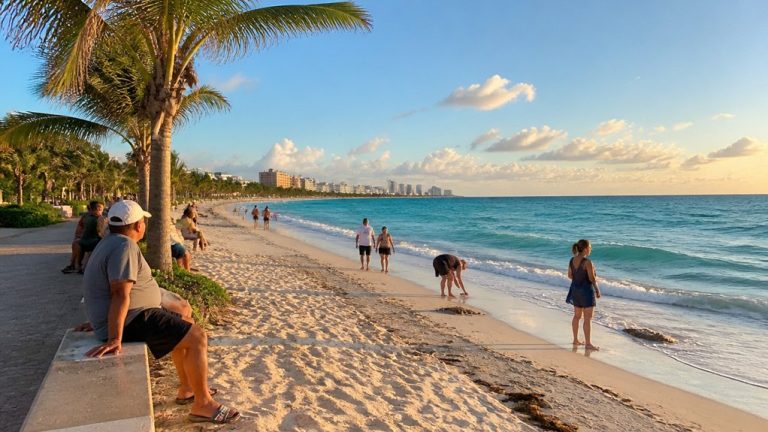
Often, the easiest next stop from El Rey is Playa Delfines, a short walk away where Cancun opens into a broad public beach of powdery white sand and bright turquoise water. After the ruins, you can stretch out under palapas, take a quick swim, or just listen to surf hit the shore. Bring your camera. This public beach rewards patient eyes with brown pelicans, hang-gliders, and wide ocean views. For an easy plan, try:
- Walk to the Mirador de Playa Delfines for skyline photos.
- Use the restroom, then claim a sunny patch of sand.
- Book snorkeling, paddleboarding, or a boat tour nearby.
If you don’t have a car, hop on the Hotel Zone red bus for 12 pesos and walk from the Playa Delfines stop. Easy, scenic, and gloriously sandy. If you want another nearby beach option afterward, Playa Caracol is known for its calm, shallow water and family-friendly feel.
Museo Maya Visit
Curiosity pulls you a few minutes up the road to Museo Maya de Cancún, where the story of El Rey gets its missing pieces and the original sculptured “King,” the Cabeza de El Rey, waits inside. In three minutes by car, taxi, or bus, you reach galleries filled with artifacts and panels that explain El Rey’s trade, burials, and sky watching. Seeing the King (Cabeza de El Rey) up close makes the site feel human. You’ll spot links to Chichén Itzá, Tulum, and Xel-Há too. Admission includes San Miguelito, so one ticket gives you a stop. Plan one to two hours here after a 30 to 60 minutes at El Rey. Hours are generally 9:00 AM to 6:00 PM, last entry around 4:30 PM. Before heading out, review the latest Travel Advisory information from the U.S. Department of State for Mexico.
Mangroves And Cenotes
Branch out from the ruins and you can trade stone paths for the green maze of Nichupté Lagoon, where the mangroves beside El Rey open into calm channels used long ago for canoe travel and now for easy eco-tours by kayak or small boat.
From Hotel Zone docks, you can join a guided trip that lasts 2 to 3 hours. Many visitors treat the lagoon as Cancun’s natural oasis, pairing wildlife watching with a quieter side of the Hotel Zone.
- Spot herons, frigatebirds, and mangrove crabs in the roots.
- Learn how mangroves shelter young reef fish and soften storm surge.
- If you want cenotes, plan a separate inland stop on a Chichen Itza or Tulum day trip.
El Rey itself doesn’t have cenotes, so asking operators about freshwater swims saves time and keeps your day balanced between birds, paddles, and pools.
Frequently Asked Questions
Are Guided Tours Available at El Rey Ruins?
Yes, you’ll find guided tours at El Rey Ruins through local operators, and you can also hire private guides. Some packages include audio guides, and if you’re visiting with others, ask about available group discounts.
Is El Rey Ruins Wheelchair Accessible?
Yes, you’ll find limited wheelchair ramps and some accessible pathways, but uneven terrain can still challenge you. You may need transfer assistance in certain areas, and service animals are allowed if you follow site rules.
Can You Swim at the Beach Near El Rey?
Yes, you can swim nearby, but you’ll want to check Water quality first. Calm swimming isn’t guaranteed because the Rocky shoreline and Seasonal currents can create rougher conditions, so you should stay alert while swimming.
Are There Lockers or Storage Facilities On-Site?
Right off the bat, you won’t find site lockers, visitor storage, bag check, or temporary safes on-site, so you’ll need to travel light and keep valuables with you or store them at your hotel instead.
Is Photography Allowed at El Rey Ruins?
Yes, you can take photos there, but you should follow photo etiquette, check tripod restrictions, obey drone regulations, and use lighting tips to protect the site while capturing clear, respectful images during your visit today.
Conclusion
El Rey proves you don’t need a full day to feel Cancun’s older pulse. You walk past weathered stone, pause by low plazas, climb your gaze up El Castillo, and share the paths with sun-loving iguanas that seem to own the place. Go early or late, bring water and a hat, then pair the ruins with Playa Delfines or the Museo Maya nearby. You get history, sea breeze, and an easy stop in one hour.